- Industries
- Freight brokers
- Weekly brief
Watch Tower · Applied Intelligence for your Business · Freight brokers
A weekly operations brief for freight brokers
The goal: Cover more loads with fewer fall-offs, keep carrier files in order and know which customers and lanes actually make money.
From week 4 you get a brief built from your own records: your goals, the KPIs with their assumptions, the options in front of you with their guardrails, and a 30-day agenda. Bifrost answers your team's questions about the same records, and shows how each number was worked out. We review it with you every week.
What you see
Bifrost in the Watch Tower Console
For owners and operations leads at freight brokerages
What it looks like for freight brokers
The KPIs, cards and questions below are examples of what we set up with you. The names and units are made up.
KPIs, with the assumption behind each
Cards on the work tracker
- Chase the expired insurance certificate before the next tenderCarrier rep · due Today · Carrier: Ridgeback Haulers
- Re-price the Atlanta–Charlotte lane after two fall-offsAccount manager · due Thu · Customer: Peachtree Supply
- Close the open damage claim from load 88213Claims lead · due Fri · Load 88213
Records you already keep
- Load board and TMS exports
- Carrier packets, insurance certificates and authority checks
- Customer rate confirmations
- Claims and fall-off logs
Assets in the register
- Customer accounts and their lanes
- Approved carriers
- Offices and the people who cover each desk
Questions your team can ask Bifrost
- Which lanes had the lowest margin per load last month?
- Which carriers fell off more than once this quarter?
- Which active carriers have insurance expiring in the next 30 days?
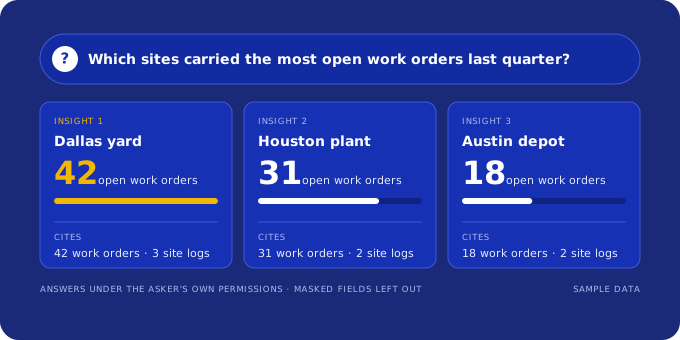
Bifrost answers from the records in your own workspace and shows how each number was worked out.
How it runs
Weekly brief, step by step
- Your records come in during week 1 and your goals and KPIs are set in week 2.
- Your first brief arrives in week 4, with the assumptions behind every number.
- Your team asks Bifrost about your own records, and each answer shows the records it used.
- We hold the weekly review with you and update the brief from what moved.
The barriers this crosses
- Use: What exactly would I use it for? We name the specific uses by role and by industry: the decision, the calculation, the plan, the brief.
- Consistency: Will this still be useful next week? We design AI into the daily system: the Console, the toolkits and the career plan people come back to, with customer success that follows up.
Rules and facts for freight brokers
What the records have to show
- A broker of property must keep a surety bond or trust fund of $75,000 on file with FMCSA (forms BMC-84 or BMC-85).Source: 49 CFR 387.307, Property broker surety bond or trust fund
- Brokers must keep a record of each transaction for three years, and each party to the shipment may review that record.Source: 49 CFR 371.3, Records to be kept by brokers
A summary for planning work, not legal advice. Check the source for the full rule and any state requirements.
Start
See it on a sample company first
Founding 10
$2,000 for setup and the first 3 months of Watch Tower, then $250/month. Ten places. We set up your team, goals and KPIs, asset register, map and work tracker with you, then review it with you every week.
Hardware implementation is quoted separately. Start with the demo; you can order from inside it.Open the free demoQuestions
Common questions
Our team lives in the load board. Why add a Console?
The load board covers loads. The Console holds the goals behind them (margin, fall-offs, carrier compliance), the actions each desk owns and a weekly review, built from the same exports.
Where do the answers come from?
Only from the records in your own workspace. Bifrost answers questions about them and shows the records it used and how each number was worked out, so your team can check it.
What does a brief look like before we pay?
Open the free demo: it runs on a fictional company in your industry, with a sample brief you can read end to end.
What does Watch Tower cost for freight brokers?
Founding 10 covers setup and the first 3 months in one payment, then a monthly price; the numbers are on this page and on the pricing page inside the demo. Hardware implementation is quoted separately.
More
More for freight brokers
- A work tracker for freight brokers
- An asset register and map for freight brokers
- Goals and KPIs for freight brokers, with the assumptions written down
- Everything for freight brokers
- Read a sample week-4 brief
Weekly brief in other industries
- Weekly brief for trucking companies
- Weekly brief for 3PL warehouses
- Weekly brief for cold-chain and reefer carriers
- Weekly brief for general contractors
- Weekly brief for HVAC contractors
- Weekly brief for electrical contractors
- Weekly brief for excavation and sitework contractors
- Weekly brief for farms and agribusinesses
- Weekly brief for cattle ranches and feedlots
- Weekly brief for food and beverage processors