The Watch Tower Blog
AI for Trucking Companies: Five First Jobs, Role by Role
AI for trucking companies, made concrete. A 35-truck regional carrier shows the first job AI can do for dispatch, safety, shop, billing and the owner.
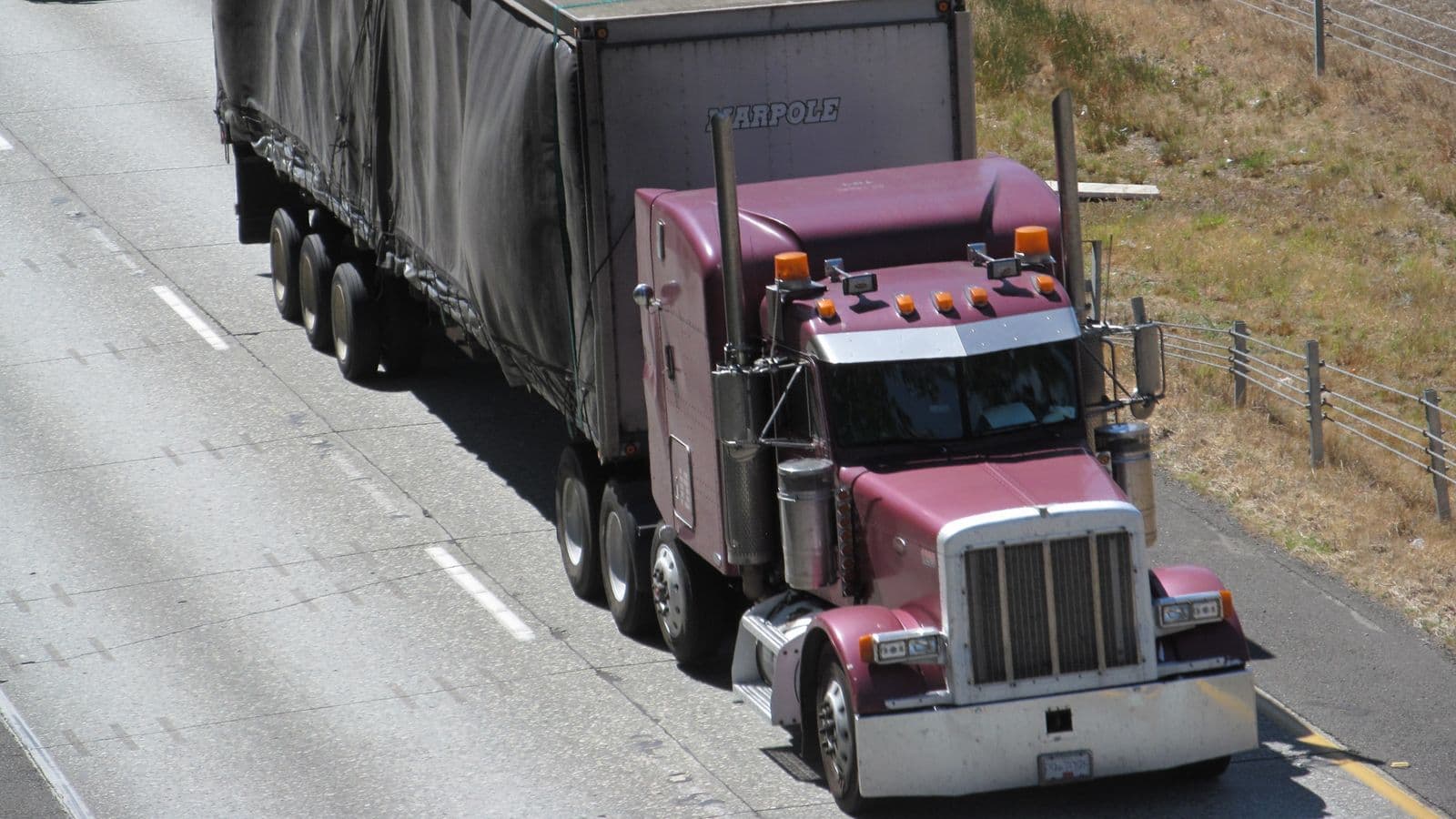
You run trucks to make money on the miles, keep drivers safe and legal, and get paid on time. Every pitch about AI for trucking companies seems to talk about self-driving rigs or a platform that "optimizes everything". Neither tells a dispatcher or a shop foreman what to do differently on Monday. This guide does: it names one concrete first job for AI in each seat at a mid-size carrier, using a worked example.
That gap is the second of the five barriers between AI and real results, Use: what exactly would I use it for? (The full set is in how to start using AI.) Most carriers have already heard enough to be curious. What they lack is a first job specific enough to try.
The worked example: a 35-truck regional flatbed carrier
Here is an illustration, not a customer story. Picture a family-owned flatbed carrier with 35 tractors, about 50 trailers and a terminal with a four-bay shop. It hauls steel, lumber and building materials across a few neighboring states, mostly for repeat shippers. The office is six people: the owner, two dispatchers, a safety and compliance manager, a shop foreman and a billing clerk.
The company already has plenty of data. The electronic logging devices record hours. The shop keeps work orders. Billing has every load, rate and accessorial. The problem is that each sits in its own system, and the answers people need every day sit in someone's head or a spreadsheet they rebuild every week.
Five first jobs, one per seat
Each of these starts from a decision someone in the office already makes. AI does not make the decision. It pulls the evidence together so the person can make it faster and with fewer misses.
1. Dispatch: the next-day plan against hours and equipment
The decision: which driver and truck take which load tomorrow.
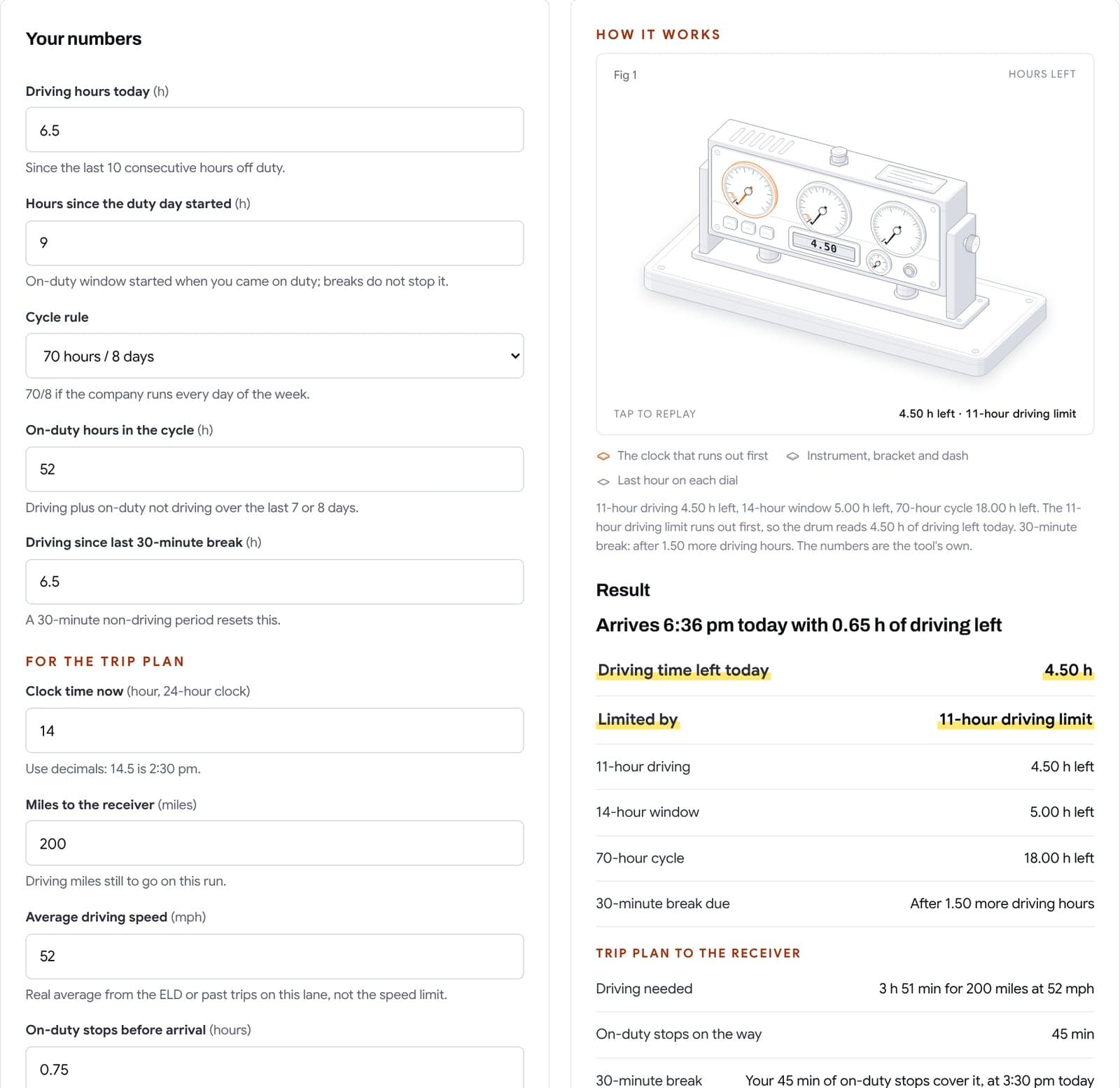
The first job for AI: each afternoon, combine tomorrow's tendered loads, each driver's remaining hours under the federal rules (the FMCSA hours-of-service summary sets an 11-hour driving limit inside a 14-hour window for property carriers), trailer types and home-time requests into a draft plan. The dispatcher sees which loads fit cleanly, which ones are tight on hours and which drivers are due home. She adjusts and commits it.
2. Safety: patterns in inspection defects
The decision: which trucks and which drivers need attention before the next roadside inspection.
The first job for AI: read every driver vehicle inspection report and roadside inspection from the last quarter and group the defects by truck, by type and by driver, in plain words. The safety manager sees, for example, that lighting defects keep coming back on four tractors that share the same trailer pool. That is a question for the shop, not a lecture for drivers. The review is only as good as the reports behind it, so a consistent pre-trip inspection checklist for every driver gives it clearer defect notes to work from.
3. Shop: which truck is costing more than it earns
The decision: which units to keep, which to repair and which to trade.
The first job for AI: match shop work orders, parts and downtime days against each tractor's revenue miles from billing. The foreman and the owner see a short list of units where repair cost and lost days are climbing, with the inputs shown beside each figure so they can argue with it.
4. Billing: detention and accessorials that never got billed
The decision: what to invoice, and what to raise with a shipper.
The first job for AI: compare arrival and departure times from the logs with the free time in each shipper's rate confirmation, and flag stops where detention or a layover was likely earned but not billed. The clerk checks each flag against the paperwork before anything goes on an invoice.
5. Owner: lane and customer profitability
The decision: which customers and lanes to grow, re-price or let go.
The first job for AI: pull revenue, empty miles, wait time and claims by customer and lane into one monthly picture. The owner gets an answer to a question she has always answered by gut: which repeat shipper is actually the best one to work for. That is AI business intelligence at its most practical: one decision, with the evidence beside it.
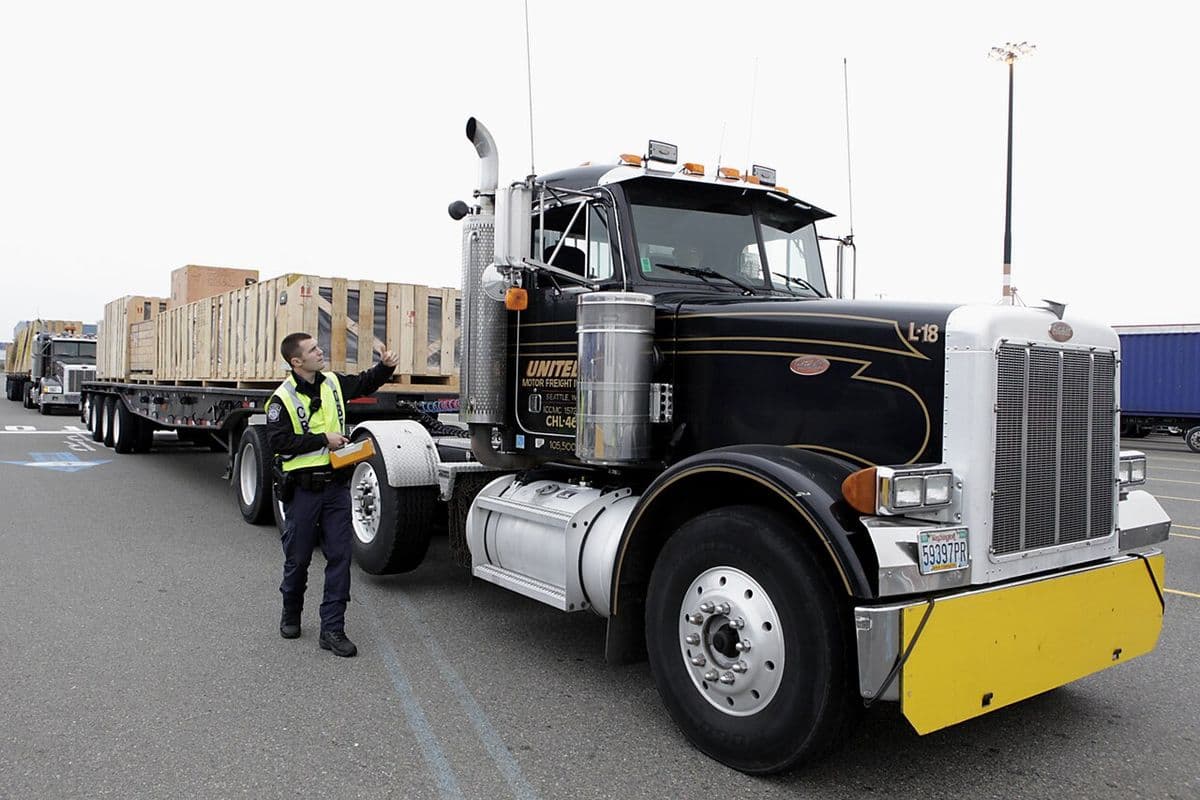
What these five jobs have in common
Look across the list and a pattern shows:
- Each starts from a decision the company already makes, on a schedule it already keeps.
- Each uses data the carrier already has, from logs, work orders and billing, rather than a new system on day one.
- Each keeps a person in the decision. The output is a draft, a flag or a picture, never an automatic action.
- Each shows its assumptions, so a dispatcher or foreman can see why a number is what it is.
That last point matters more in trucking than almost anywhere. People who have run freight for twenty years will not trust a figure they cannot question, and they shouldn't.
Choosing where to start
Don't start all five at once. Pick the seat where the decision is most frequent and the pain is easiest to see. For most carriers, that is dispatch or billing: dispatch because the plan is made every day, billing because unbilled detention is money already earned.
Then build the first job with the person who sits in that seat. The dispatcher knows which loads always run late and which shippers never have the dock ready. The clerk knows which rate confirmations hide the free-time terms. Their knowledge is what turns a generic tool into one that fits the operation.
Run it for a month alongside the current way of working. Compare the two, adjust, and only then move to the next seat.
How Watch Tower fits
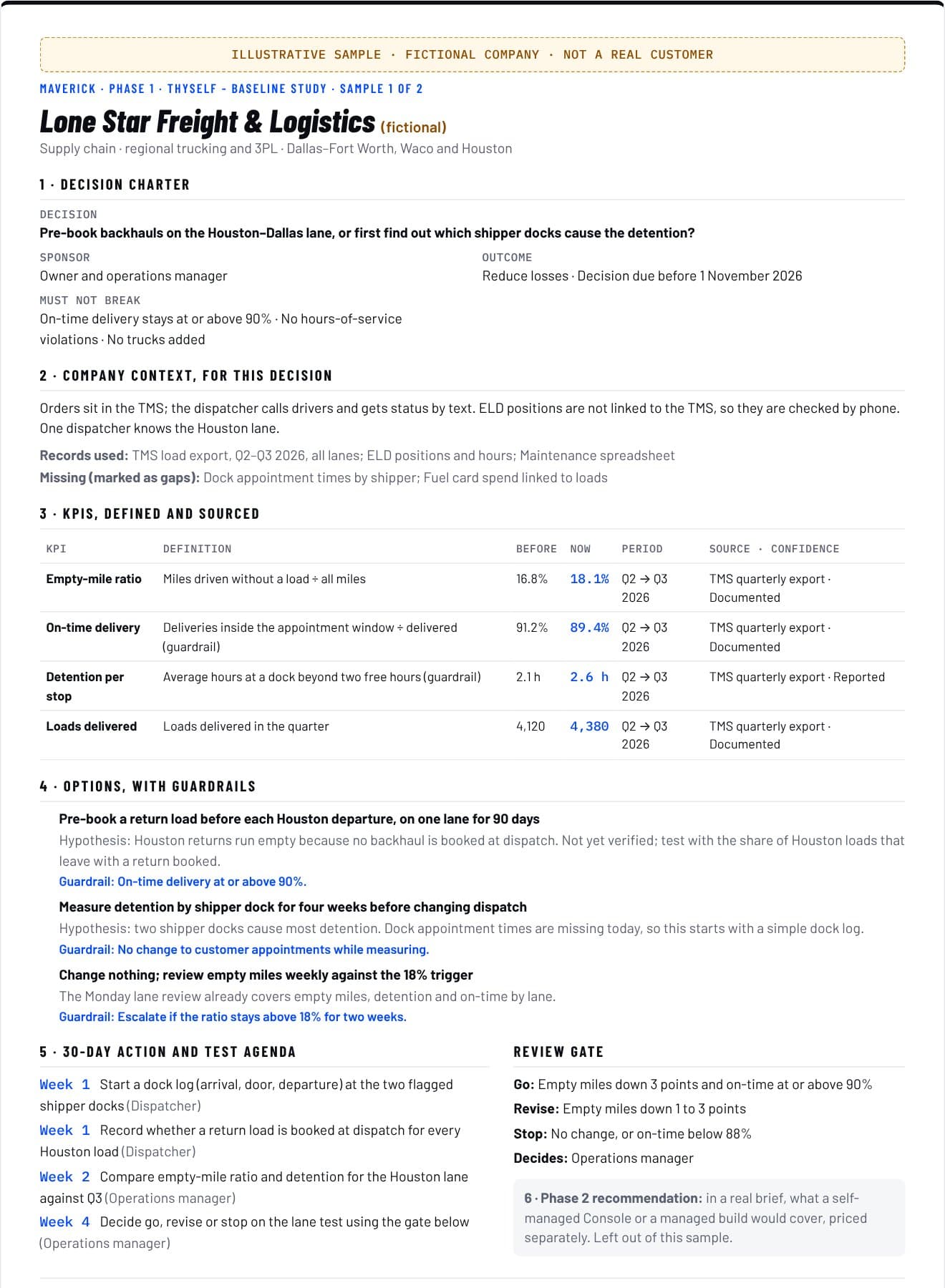
Watch Tower is Applied Intelligence for your business. It brings the people, assets, processes and evidence of an operation together, so a dispatcher, a safety manager and an owner work from the same picture instead of three spreadsheets. Talos puts terminals, customer sites and lanes on a real map, and we handle the trackers and the install for you (see asset tracking for fleets and equipment). The Console is one place where leaders see the business, its evidence and its decisions. Bifrost, the insights assistant, answers questions about that picture and cites what it used.
For the broader view across industries, read AI for traditional industries, or the phased AI implementation plan for your company.
Your next step: pick one seat in your office and write down the decision that person makes most often. Then bring it to us, and we will map the first job with the person who does the work.
Frequently asked questions
How can trucking companies use AI?
Trucking companies can use AI to pull together the evidence behind decisions people already make, one seat at a time. Practical first jobs include a draft next-day dispatch plan, grouping inspection defects by truck, finding units that cost more than they earn, flagging unbilled detention and showing lane and customer profitability.
Can AI help with truck dispatch?
Yes, AI can draft the next-day dispatch plan from tendered loads, each driver's remaining hours of service, trailer types and home-time requests. The dispatcher sees which loads fit cleanly, which are tight on hours and which drivers are due home, then adjusts and commits the plan.
Where should a trucking company start with AI?
Start in the seat where the decision is most frequent and the pain easiest to see, which for most carriers is dispatch or billing. Build the first job with the person in that seat, run it for a month alongside the current way of working, compare the two, then move on.
Does AI for fleet management make decisions automatically?
No, in these first jobs AI does not make the decision. It pulls the evidence together as a draft, a flag or a picture, and a person decides. Each output shows its assumptions, so a dispatcher, safety manager or foreman can see why a number is what it is and argue with it.



.jpg)